Notes ·
The button is the progress bar
A concept for an assistant inside Cravel that asks before it spends a restaurant’s money. Nothing here shipped in Cravel.
Cravel, my company, puts a restaurant’s scheduling, inventory and floor in one place. The moment I cared about is the second before the assistant acts, when a kitchen manager decides whether to let it.
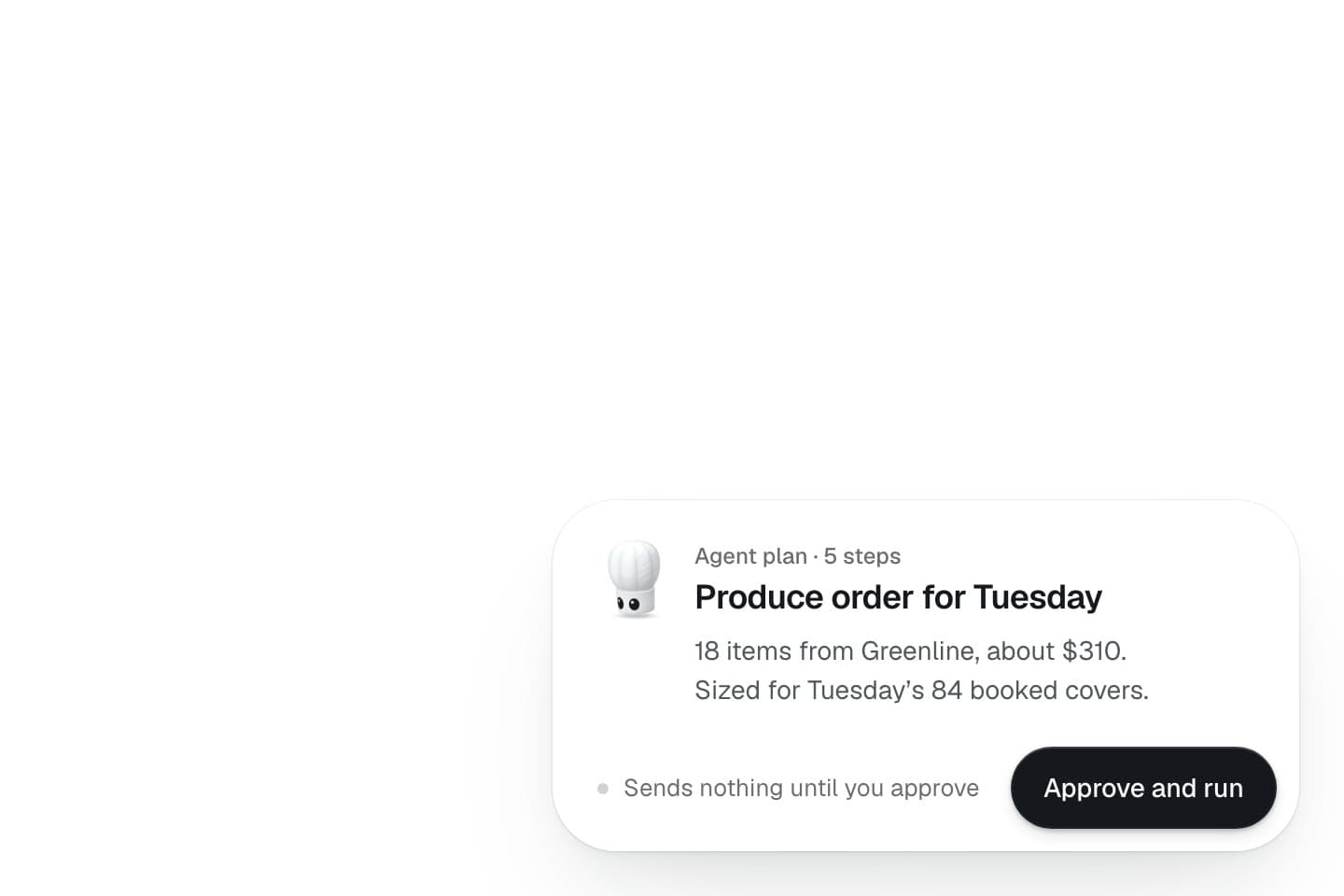
The assistant is Sous, a chef’s toque with eyes. You ask it to order Tuesday’s produce. It checks the stock and the bookings, comes back with 18 items from Greenline for about $310, and waits. You approve and it runs five steps.
One rule. It is one surface the whole way. Launcher, chat, working pill, approval card and receipt are the same object changing shape, so every decision below is a transition.
The pill asks, then waits
At rest Sous is a pill in the corner that reads “Ask Sous…”. A tap grows it into a chat whose right and bottom edges never move, so it grows out of the spot you touched.
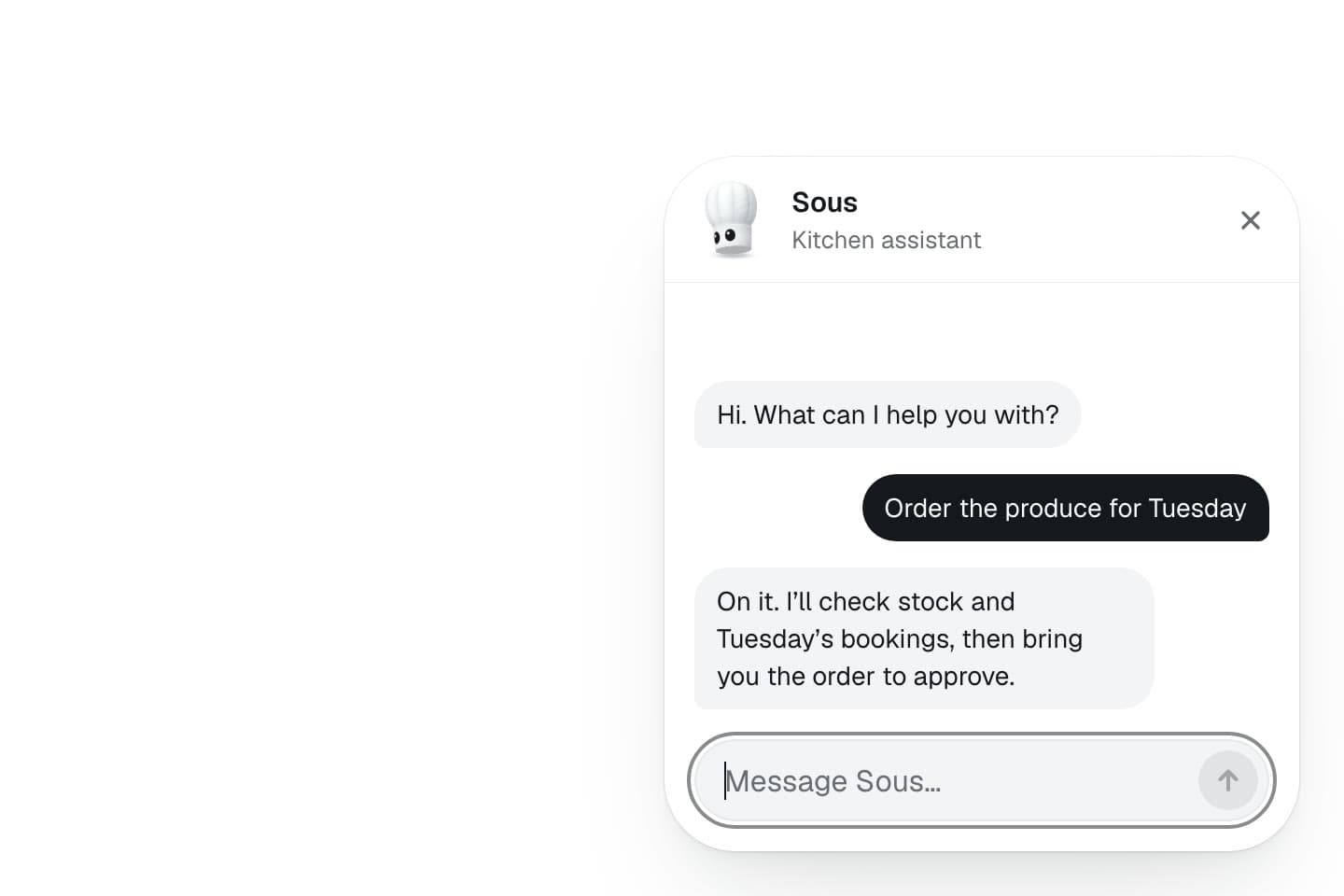
While Sous works, the chat folds back into the pill and the chef cooks in it. It hops about every two thirds of a second, never on a clock, and every third hop crouches and spins.
When the plan is ready the pill turns dark, an orange badge lands on the toque and a beam runs along the bottom edge. Then it waits. It never opens the card on its own.

The card is the pill, opened
Tapping the ask grows the same surface into the approval card. The button’s own morph is 480ms on an ease-out quart, which covers 69% of the size in the first quarter of its time. The card is bigger, so it gets 1.2 times that, 576ms, on a softer curve that is at 28% by the same point.
Height follows width by a tenth of the duration, so the avatar arcs into its corner. The content arrives in reading order, eyebrow and title, then body, then footer, each group only once the moving edge contains it.
The close is 0.7 of the open, 403ms, and the order flips. You have already decided, so the content leaves first and the surface holds briefly before it folds. The pill’s line leaves at once when the card opens and arrives over the last 40% of the close.
The card has one action, so the button is near-black on white. The accent belongs to the progress and shows up only after the press. Done is a green tint with a dark green label, so it reads as a state, not another button.
A path, not a gradient
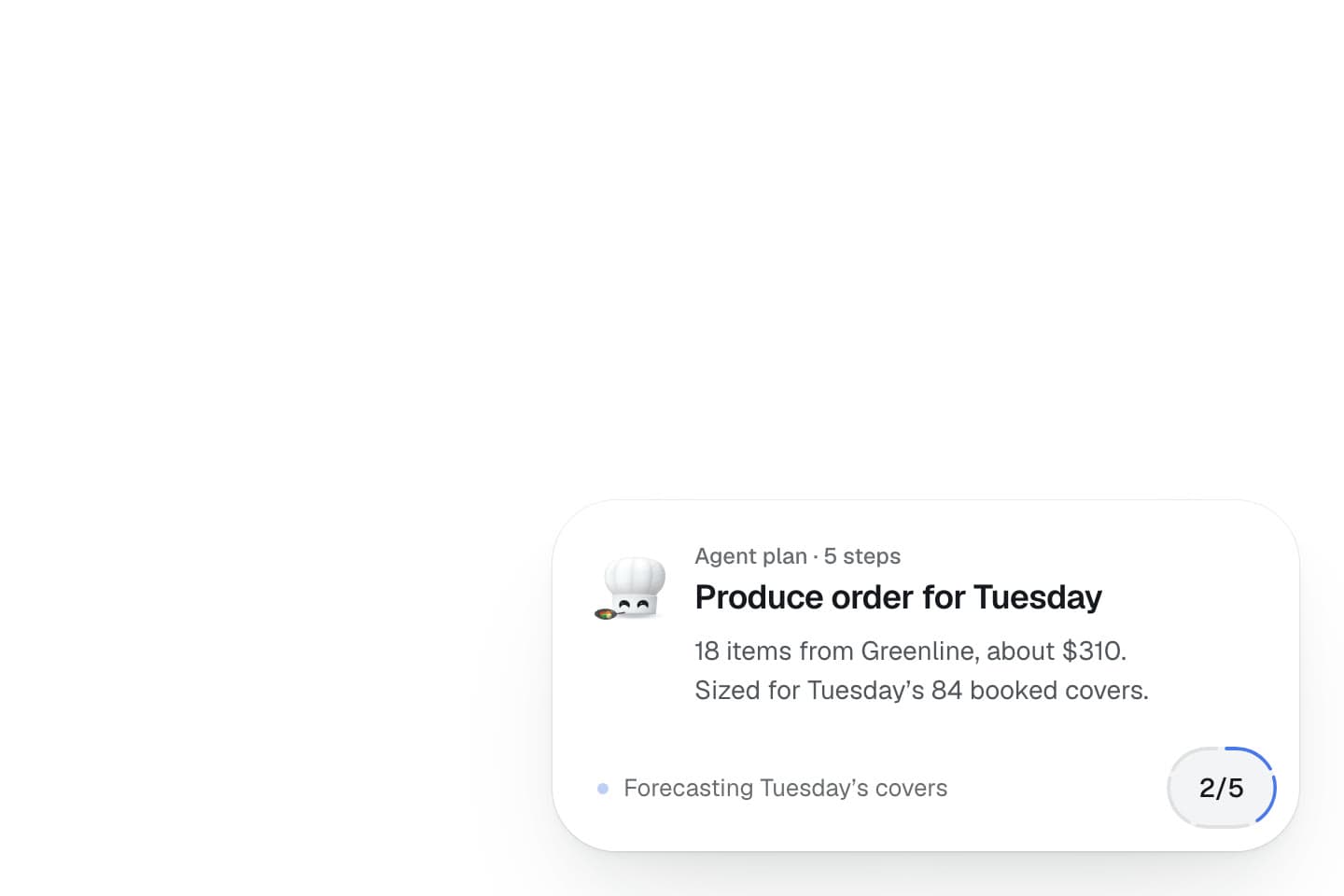
Press Approve and the button shrinks to a count, 1/5, and a 2px ring starts round its edge, one arc per step. A conic gradient turns at a constant angle, so on a pill it races round the ends and crawls along the sides.
So the ring is an SVG path along the pill’s real outline, with pathLength set to 1. The dash moves at one speed along the true perimeter. The path is rebuilt from the live box on every frame of the width morph, and the gaps stay a fixed 3px plus one stroke width.
Each step keeps its own pace
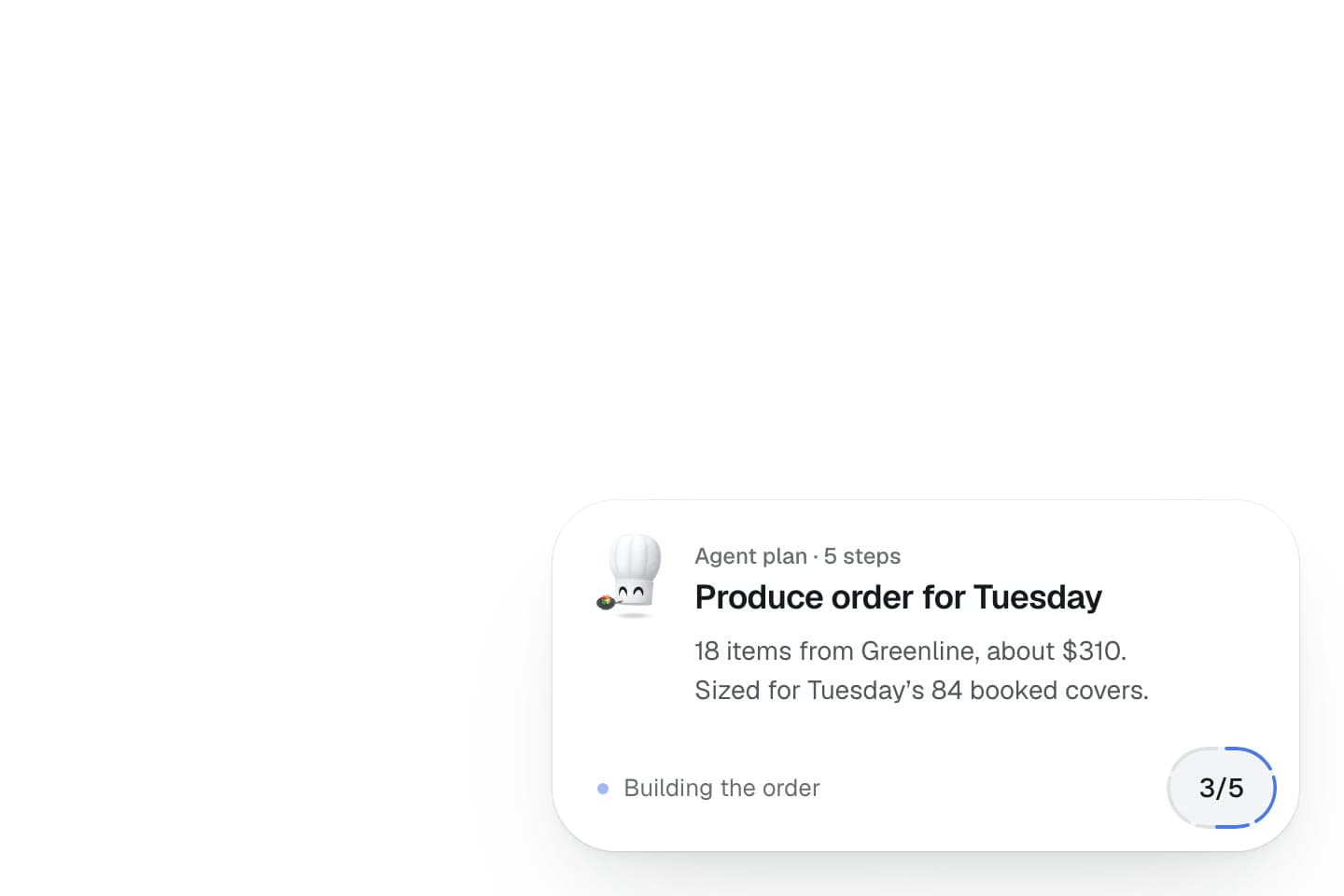
The arcs are equal and the time behind them is not. In the 7.5-second run, reading the stock is one quick call and takes 0.75 seconds. Building the order walks every line of the forecast and takes 2.6, 3.5 times as long.
Inside a step the arc creeps, fast and then slower, and never reaches the end on its own. When the work is done it closes in 200ms and holds for 180ms. Only then does the count move. A count that ticks when a step starts is a promise. One that ticks when it ends is a report.
Labels swap without overlapping. The outgoing one leaves at once, rising and blurring. The incoming one waits 60ms and rises 6px. A digit is a smaller event than a label, so it rises 3px.
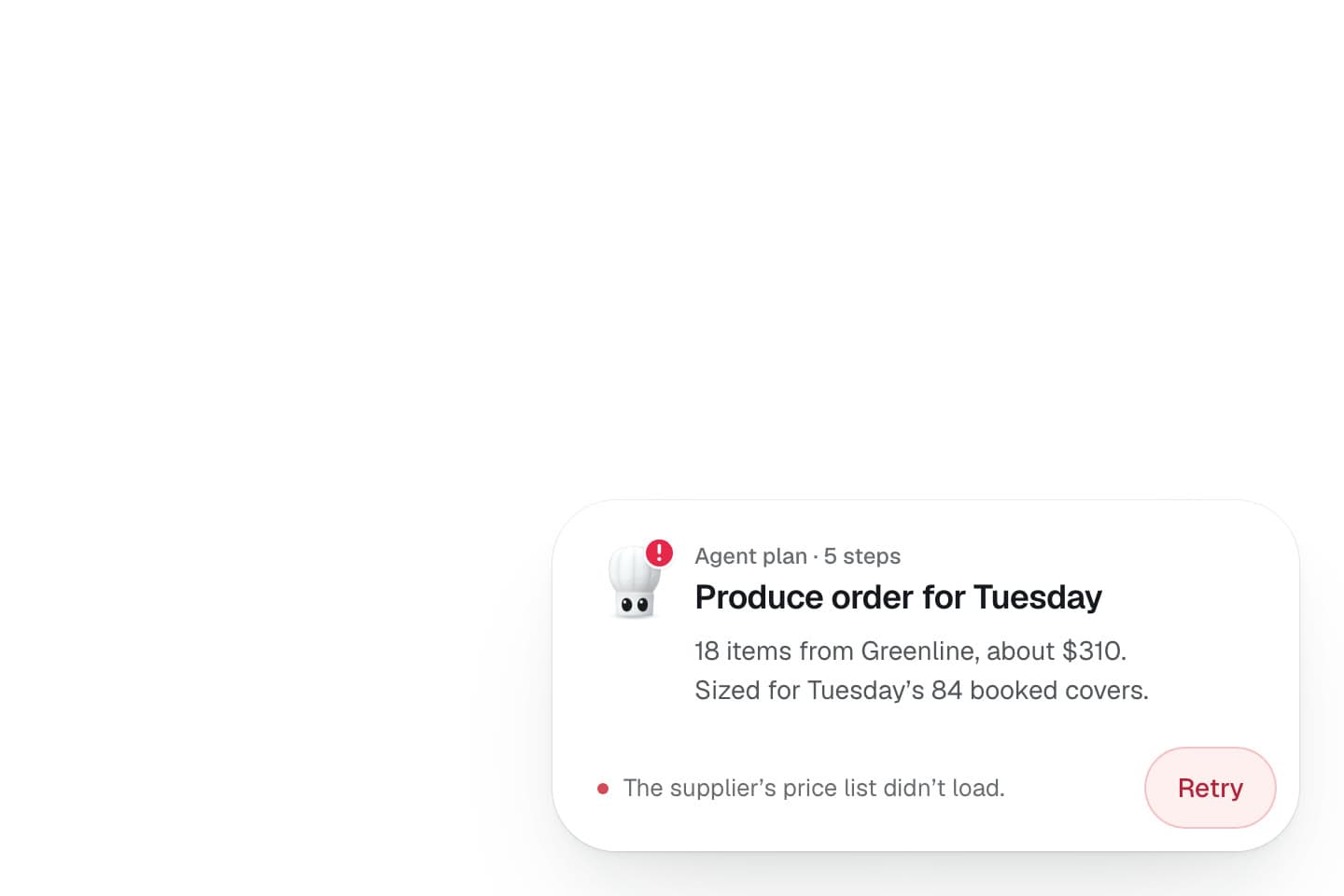
The take stops at step 3. The status line names the system that failed, “The supplier’s price list didn’t load.” A manager can judge that. The ring’s head turns red, its tail drains into it, and the button becomes Retry. Nothing shakes.
Retry resumes at the failed step. Steps 1 and 2 already happened, and counting them again would say the agent forgot its own work.
Done lands, holds, then folds
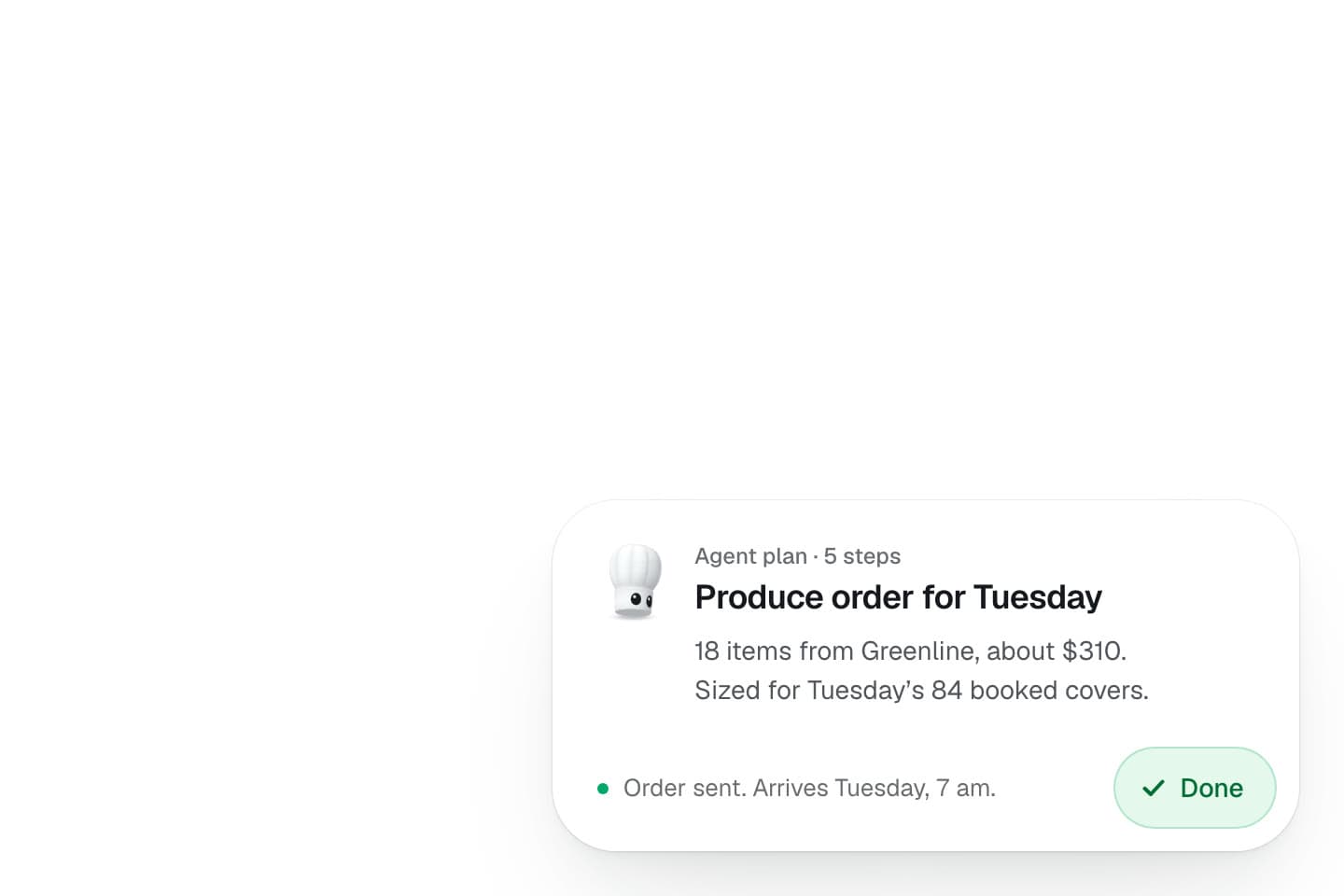
When the last arc closes, the ring turns green and dissolves into the button, the check draws and the button widens to Done. It settles with a 4% dip over 360ms, then holds for 1600ms before anything else moves.
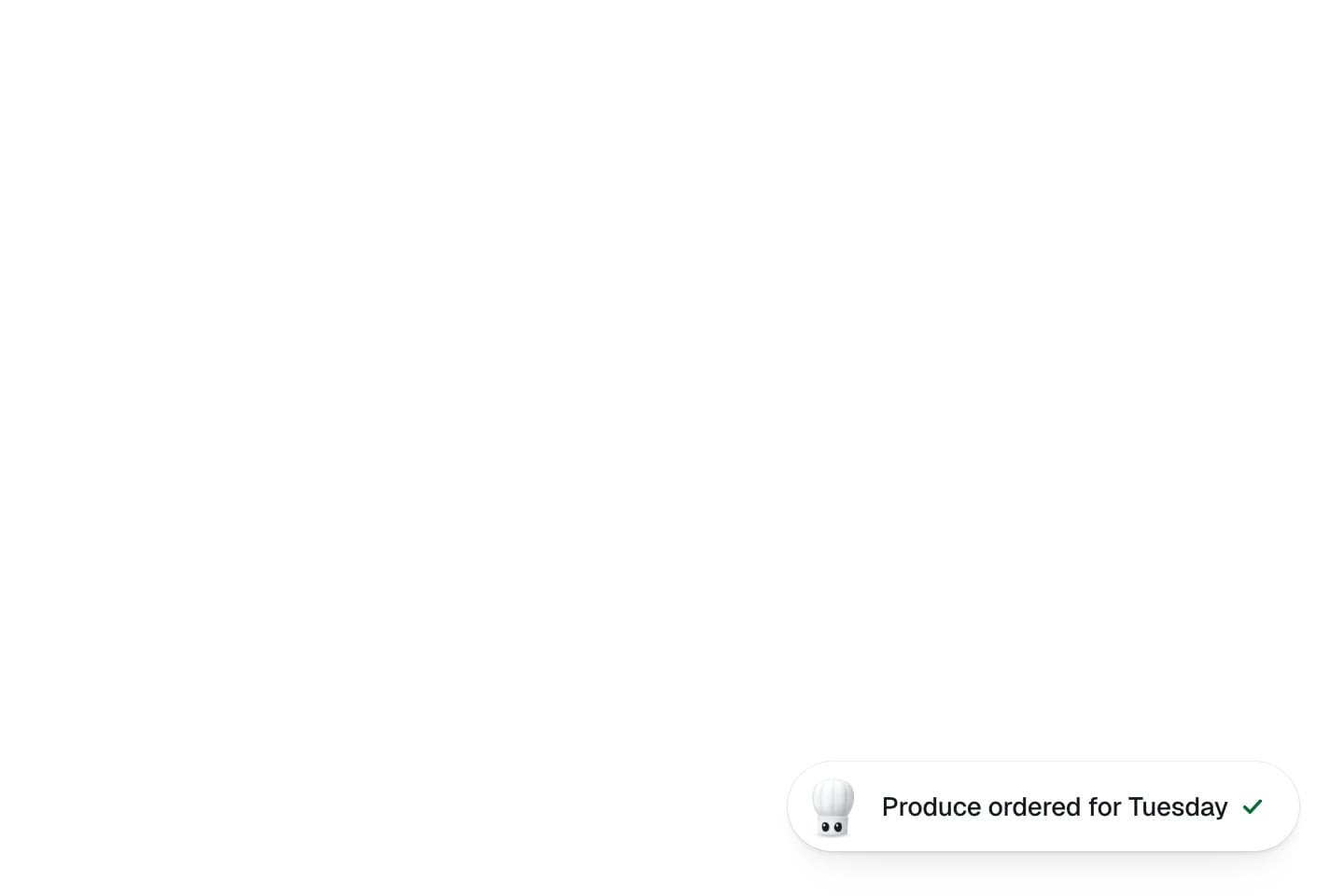
Then the card folds into the pill it came from, and the pill says what changed: “Produce ordered for Tuesday.” Past tense, and it names the order, not the run. Tapping it in the lab opens the receipt, because a done notice should not ask again.
What I cut
A fill that washed the accent across the button instead of the ring. It is still a knob in the lab, off. Even pacing, which looked scripted. An overshoot on Done, because a finished order should land, not bounce. An avatar from the bot-avatars library, which Sous replaced, though its rig still moves the way that library’s does.
Two smaller slots for the chef. Inline in the eyebrow, at 20px, it read as an icon. In place of the status dot, at 22px, it crowded the button. The header won, at 40px.
The version on this site starts at the card. The chat, the ask and the stop stay in the lab.
How it was built
React, SVG and CSS, a WebGL canvas for the chef, and the border-beam library for the ask’s glow. The morph runs on a small engine with five channels: the surface’s width and height, and the avatar’s two offsets and its scale. A new target mid-morph adds a layer instead of restarting, the way Core Animation does. Every duration lives in one table that the component, the CSS and the showcase all read, so the take cannot drift from the motion it records.
I directed it. It started on 2 October in a lab of its own, from a written plan that split the build between two agents. On 7 October it moved into my shared lab, and on 10 October it came to this site. Claude Fable 5.1 co-wrote both moves.


